
Pack a Week in a Personal Item (Without Looking Like You Tried)
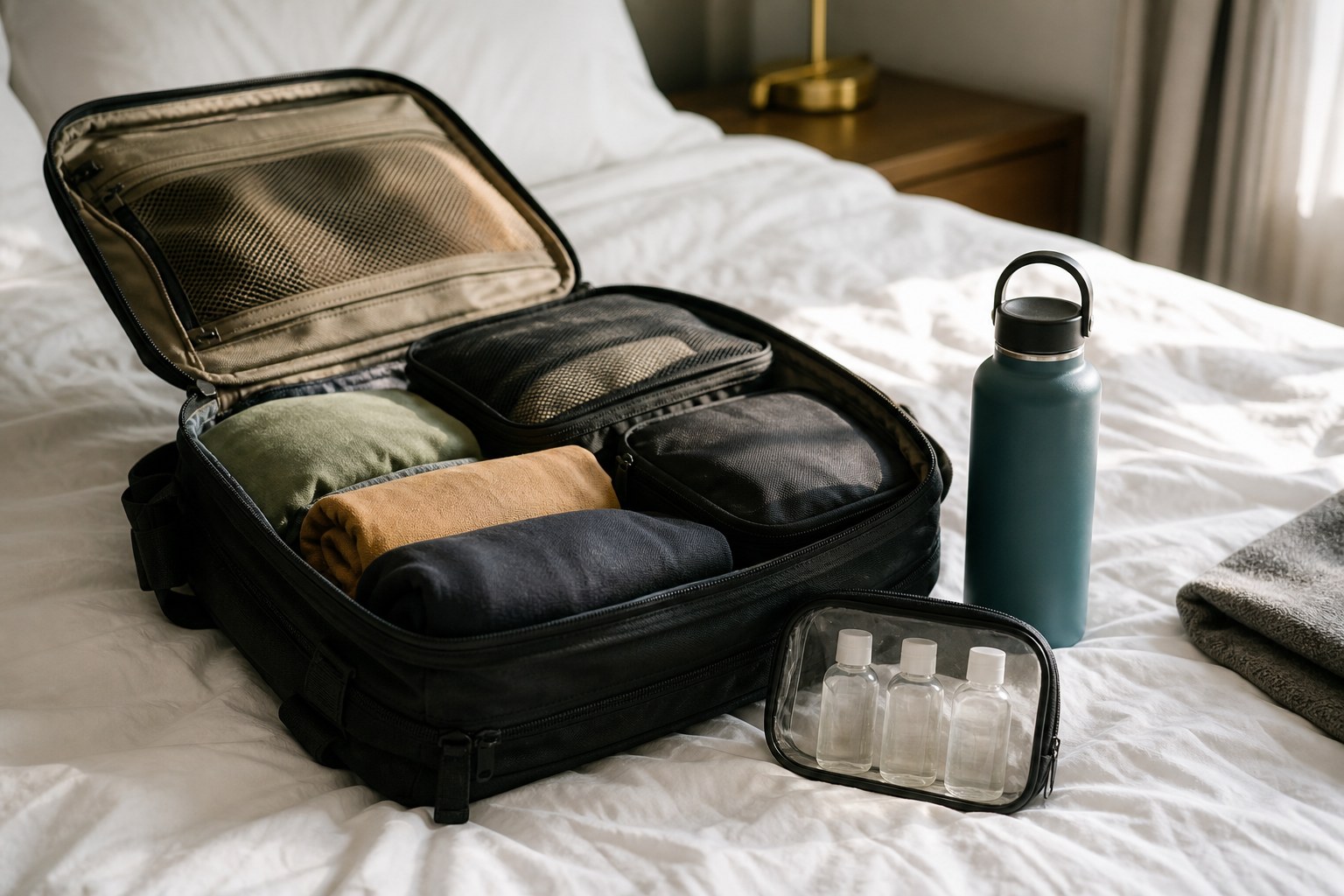
The trick is not folding like a video. It is deciding, before a single sock goes in, that the bag is the constraint and everything else is a negotiation. One-bag travel looks effortless when the bag is right, the liquids are already legal, and you are not buying airport water because you packed like a person who forgot they drink water.
The bag is the plan, not the souvenir
Start with the bag you will actually carry, then pack to its shape. The Osprey Europe Farpoint Backpack is the one we keep pointing at for this job: a spacious main compartment so clothes can live in one place, multiple pockets so the small things do not migrate into the main pile, and a comfortable harness so a week of your life does not sit on one shoulder like a punishment. It lists at $184.95 and is often closer to $155.36. That is not cheap, which is the point. A personal-item week only works if the bag can swallow a real wardrobe and still feel like something you would walk across a city in.
Do not treat the Farpoint as a hiking thesis. Treat it as a closet with straps. The main compartment is for the clothes cube or the rolled stack. The extra pockets are for the things that ruin a pack when they float: charger, documents, the toiletry kit, a spare pair of socks you can reach without unpacking on a train floor.
A clothing formula that survives seven days
A week in a personal item is a math problem, not a fashion problem. Wear the heaviest shoes and the bulkiest layer onto the plane. Pack two bottoms that both work with every top. Pack four or five tops that can repeat without looking like a uniform: one nicer, two plain, one that can get dirty. One sleep thing. A compact rain shell if the forecast is not a joke. Underwear and socks for every day, because those are the items you do not want to negotiate with a hotel sink on night three.
Color is a packing tool. If everything is in the same quiet range, outfits remix themselves. If you pack one loud piece, it has to earn the volume it takes. Leave the “just in case” blazer at home unless the trip literally requires it. Just-in-case clothing is how personal items become checked bags.
Liquids that do not become a bin-side confession
Full-size bottles are how a tidy pack becomes a security conversation. Decant shampoo, conditioner, and the face wash you already like into the Travel Bottles Pack (3oz). They are TSA-style 3oz bottles, they cost $9.99, and they come with a travel-approved bag you can pull out of the pack in one motion. That last part matters more than people admit. A zip bag you can lift onto the belt is faster than fishing three leaking bottles out of a toiletry pouch while a line forms behind you.
Fill them at home. Label them if your decants all look like water. Do not top them off until they slosh; leave a little air so cabin pressure does not turn the bag into a science project. If a product is a luxury you will not use in seven days, skip it. Three ounces is enough for a week of normal showers. It is not enough for a second household of products you do not need.
Water is cargo, not a destination purchase
Empty the bottle at security, fill it on the other side, and stop paying for the privilege of being thirsty. The Owala FreeSip Stainless Steel Water Bottle is the one that earns a pocket in this system. It has a built-in straw and a wide-mouth opening, so you can sip on the move or dump ice in at a hotel machine. It is double-wall insulated and rated to keep drinks cold for up to 24 hours. The push-button lid and carry loop mean it clips to the Farpoint instead of rolling under a seat. The lid is dishwasher-safe, which is the unglamorous feature you notice after a week of coffee-adjacent water.
At $29.99 it costs less than a handful of terminal bottles, and it is the difference between a pack that supports the day and a pack you have to set down every time you need a drink. Carry it empty through the checkpoint. Fill it after. That is the whole ritual.
How the bag actually closes
Packing order is not aesthetic. Soft clothes go against the back panel so the harness still feels like a harness. Shoes, if they must come, go in a bag at the bottom or along an edge. The 3oz kit lives in an external or top pocket so you never unpack the week to reach it. The Owala hangs by its carry loop on the outside or stands in a pocket if you have one left. Documents and a charger go somewhere you can touch without kneeling in public.
Then stop. If the bag only closes when you sit on it, something still thinks it is a suitcase. Take out the extra “maybe” shirt, not the water bottle. A personal item that bursts open under the seat is a packing failure, not a storage problem.
What this method is not
This is not a destination essay, and it is not a lecture about traveling light as a personality. It is a packing method: one bag that can take a week, liquids that stay legal, water you already own. The Farpoint handles the volume. The 3oz bottles keep the wet stuff from dictating the rest of the pack. The Owala keeps you from rebuilding the system at every kiosk. If the zipper closes on the first try, you did it right, and nobody has to watch you try.