
Goodbaby No-Touch Forehead Thermometer Review: Checking a Fever Without Waking the Kid
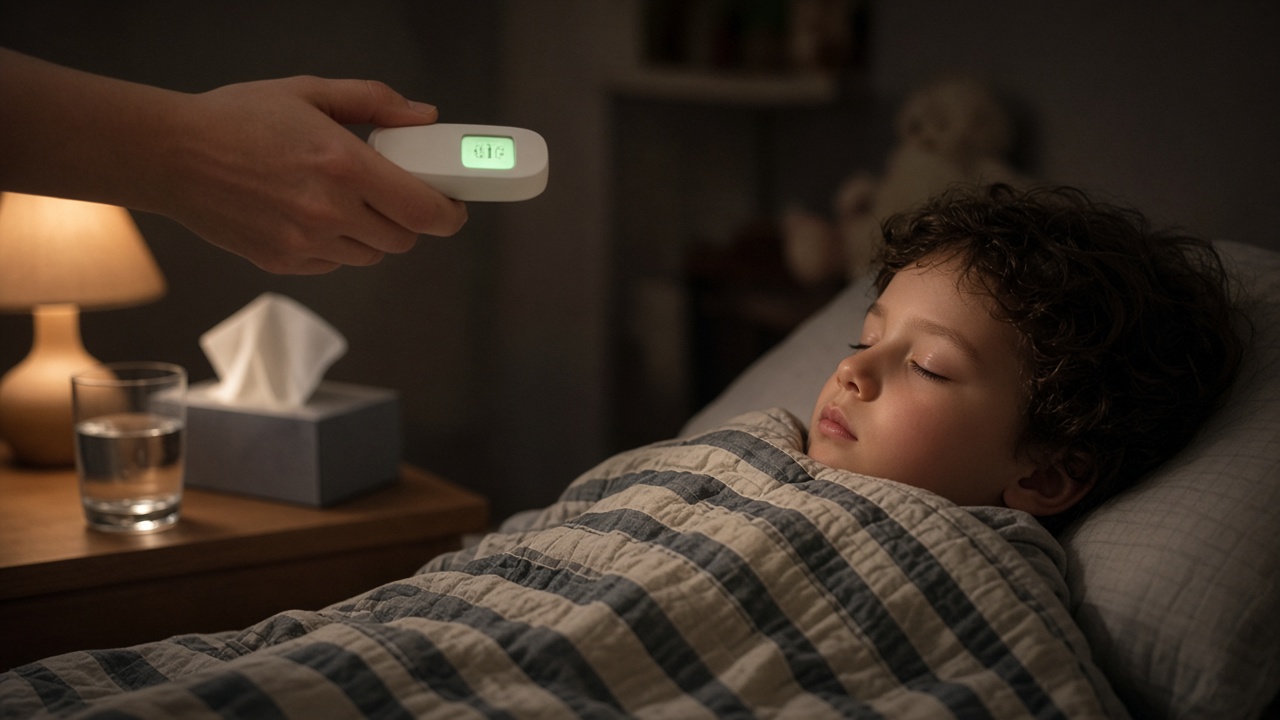
Every parent knows the 2 a.m. routine. A kid who felt a little warm at dinner is now asleep, and you want to know whether that warmth turned into a fever without starting the whole night over. An under-the-tongue or under-the-arm thermometer usually means waking them up. A no-touch forehead thermometer is built for exactly that moment. Here's our take on the Goodbaby No-Touch Forehead Thermometer on Best Items, and how to get the most out of one this cold and flu season.
What it is
Goodbaby No-Touch Forehead Thermometer for Adults and Kids, 1-Second Reading with Fever Alert takes a forehead temperature in about one second without touching the skin. Per its product page, the backlit display changes color, green for normal, orange for elevated, and red for a fever reading, it stores up to 35 past readings in memory, and it has a silent mode for nighttime checks. It's meant for the whole family, not only babies. Catalog rating: 4.5 / 5.0.
Prices on the site update daily, so check its product page for the current price.
Why no-touch helps at night
The big advantage is simple: you can check without disturbing anyone. Hold it near the forehead, press, read the screen. Silent mode matters more than it sounds, because a cheerful beep is often the thing that wakes a light sleeper. The color-coded screen also helps when you're groggy and the room is dark. You don't have to squint at decimals to know whether the reading is fine or worth paying attention to.
It's handy for sick grown-ups, too. When one person in the house is down with a cold, a thermometer that never touches anyone is easy to pass around without a round of alcohol wipes between every check.
Getting readings you can trust
Forehead readings are quick, but they're more sensitive to conditions than an oral reading. A few habits make them more consistent:
Let a kid settle for a few minutes after coming in from the cold, a bath, or a sweaty nap under heavy blankets before you check.
Brush hair and sweat off the forehead and hold the thermometer at the distance its instructions describe.
Take two readings a minute apart. If they disagree, take a third rather than trusting the scariest number.
Keep the thermometer in the same room you use it in, so it isn't coming from a cold car or a warm windowsill.
Follow the instructions in the box for distance and mode, since those details vary from model to model.
The memory is the underrated part
Storing up to 35 readings sounds like a minor spec until you're on the phone with a nurse line and they ask when the fever started and whether it's climbing. Scrolling back through the last day of readings is a lot more reliable than memory at 3 a.m. If you like a paper trail, jot the time next to each reading on a sticky note on the fridge.
Who it suits
It's a good fit for families with babies and young kids, households where several people tend to catch the same bug, and anyone who wants a quick check without a struggle. It's also a sensible thing to toss in a bag for holiday travel, when the medicine cabinet is three states away.
If you need the most precise reading for a newborn, ask your pediatrician which method they prefer. Many recommend a specific approach for very young infants, and a forehead thermometer works best as a quick screen.
A note on when to call
A thermometer tells you a number. It doesn't tell you what to do. For a very young baby with any fever, a fever that lasts, or a child who seems unusually sleepy, has trouble breathing, or isn't drinking, call your doctor rather than re-checking every ten minutes. Trust how your kid looks and acts as much as the screen.
The bottom line
The Goodbaby No-Touch Forehead Thermometer is built for the checks that happen when everyone should be asleep: about a one-second reading without contact, a color-coded display, silent mode, and memory for 35 readings. For cold and flu season with kids in the house, it's an easy one to keep in the nightstand. Check its product page for the current price.