
Before the Thanksgiving Drive: A Driveway Oil Change, a Check-Engine Code Check, and Glass You Can Actually See Through
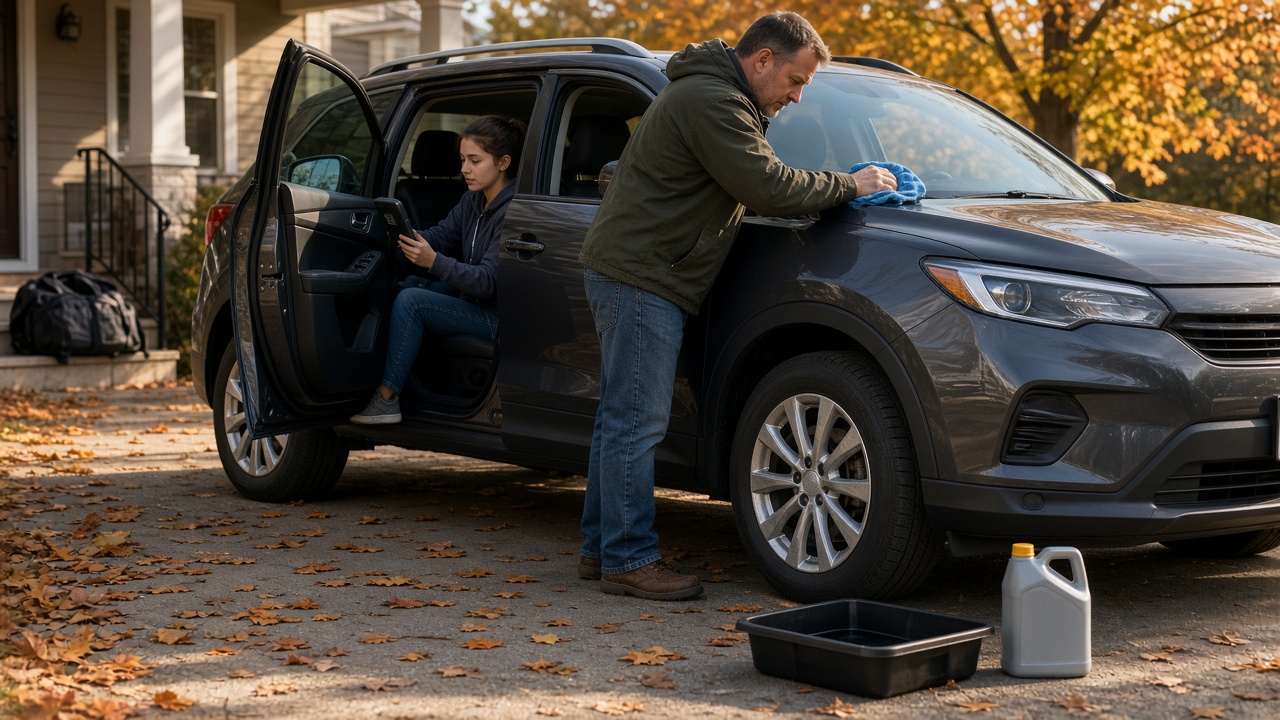
The week of Thanksgiving puts more cars on the road than almost any other stretch of the year, and a lot of them are making the longest drive they'll make all fall. The time to find out your oil is overdue or your check-engine light means something is not on the shoulder of the interstate on Wednesday night. It's a free Saturday in early November, with a month to spare. Here's a simple driveway plan built around three products already on Best Items: fresh oil, a quick look at any trouble codes, and a windshield that isn't fighting you in low sun.
The three picks
Mobil 1 Advanced Fuel Economy Full Synthetic Motor Oil 0W-20 (5 Quart) is the oil change. Per its product page, it's a low-viscosity full synthetic designed to help fuel economy while protecting against wear, deposits, and sludge, and it flows quickly on cold starts. One 5-quart jug covers most passenger-car oil changes. Catalog rating: 4.8 / 5.0.
ANCEL AD310 Classic Enhanced Universal OBD II Scanner is the code check. The listing describes a plug-and-play reader for most 1996-and-newer cars and light trucks that reads and clears check-engine codes, shows code definitions, freeze frame data, and I/M emissions readiness on a backlit screen, and needs no batteries or app. Catalog rating: 4.6 / 5.0.
Invisible Glass Auto Glass Cleaner Foaming Spray (19 oz, 2 Pack) is the last step. It's a foaming cleaner that clings to glass instead of dripping, removes film, haze, and road grime, and is ammonia-free and tint safe. Catalog rating: 4.7 / 5.0.
Prices on the site update daily, so check each product page for the current price.
Step one: confirm the oil your car actually calls for
Before you buy anything, open the owner's manual (or the oil filler cap, which often has it printed on top) and check two things: the viscosity, and any approval or spec the manufacturer lists. Many newer cars call for 0W-20, and that's who the Mobil 1 Advanced Fuel Economy jug is for. If your manual says 5W-30 or lists a specific European spec, follow the manual instead. The right oil is the one your engine was designed around, not the one with the best label.
Step two: the oil change itself
If you've done one before, a driveway oil change is an hour on a dry afternoon. If you haven't, the basics are: a warm (not hot) engine so the oil drains well, a drain pan, the right wrench for the drain plug, a new filter for your car, and ramps or jack stands rated for the vehicle. Never work under a car held up only by a jack. Pour in a little less than the capacity listed in the manual, wait a minute, check the dipstick, and top up from there. A 5-quart jug usually leaves a bit left over, which is handy to keep in the trunk for the trip itself. Take the old oil to an auto parts store or recycling center that accepts it.
Not comfortable under the car? That's fine. Bring your own jug to a shop that allows it, or just use this as the reminder to book the appointment now, before the pre-holiday rush.
Step three: plug in the code reader, even if the light is off
The OBD II port is usually under the dashboard on the driver's side, near your knees. Plug the AD310 in with the ignition on and it reads whatever the car's computer has stored. If the check-engine light is on, you'll see the code and its definition, which turns a vague warning into something specific you can look up or describe to a mechanic. Even with the light off, the readiness screen tells you whether the emissions monitors have completed, which is useful if your state inspection is coming up.
A few honest caveats. A code tells you which system flagged a problem, not always what part failed, so treat it as a starting point. Clearing a code turns the light off but doesn't fix anything, and it also resets those readiness monitors, so don't clear codes right before an emissions test. And if the check-engine light is flashing rather than steady, that usually signals a serious misfire: stop driving and get it looked at rather than reading codes in a parking lot.
Step four: do the glass last, inside and out
Late-fall sun sits low in the sky, and it lights up every smear on the inside of the windshield, exactly when you're driving into it on a long highway stretch. Do the glass last so you're not wiping fingerprints from the engine bay onto it. The foaming spray clings instead of running down the dash, which makes the inside of the windshield much easier. Use two microfiber towels, one to wipe and one to buff dry, and work in the shade so it doesn't dry before you finish. Because it's tint safe, you can do the side windows too. Keep the second can in the trunk for a mid-trip stop.
The five-minute rest of the checklist
While you're out there, check tire pressure cold against the sticker in the driver's door jamb (temperature drops lower it), look at tread depth, top up washer fluid with a winter blend, and make sure the wipers aren't streaking. None of these need a product from us. They just catch most of the problems that turn a holiday drive into a tow.
Who this plan is for
It's a good fit if you're driving a few hours to see family, you're comfortable with basic car care, or you just want to know what that check-engine light means before you pay someone to tell you. Skip the DIY parts if your car is under a warranty or service plan that covers oil changes, it calls for a different oil than 0W-20, or the problem is a flashing light, a new noise, or anything involving brakes. That's a shop visit.
The bottom line
A free afternoon in early November is enough to change the oil with Mobil 1 Advanced Fuel Economy 0W-20 (if that's what your manual calls for), get a clear read on any stored codes with the ANCEL AD310, and finish with a streak-free windshield using Invisible Glass. Check each product page for current pricing, then enjoy the drive.